Showing posts with label kitchen layout. Show all posts

Kitchen Zones

Related Posts
1 Kitchen Design
2 Kitchen Zones
3 Perspective Drawing
4 Kitchen Color Scheme
5 Kitchen Drawer System
5 Hettich Drawer Slides & Runners

A reader asked why we did not position the cooker hob on the worktop next to the oven, consistent with the idea of a cooking zone where similar tasks are grouped in one location as indicated below:

Hettich's Five Kitchen Zones for:
- Food storage
- Food preparation
- Pots & pans
- Cleaning agents a& waste
- China & cutlery

Blum's Five Kitchen Zones for:
- Consumables storage
- Non-consumables storage
- Cleaning
- Preparation
- Cooking

We loved the ideas presented by Blum and Hettich. We however think it is ok to tweak the ideas a bit to suit our kitchen layout and needs.

Our kitchen zones
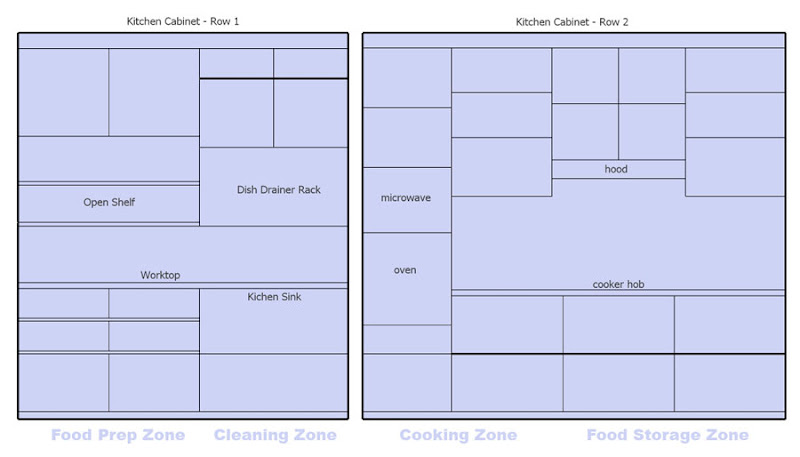
Thus we have worktop space on the left and right side of the cooker hob. That way we could place the condiment rack on the right side of the hob and cooked dishes on the left.

Owing to space constraints and kitchen layout, we had to place the large GE Profile refrigerator next to the oven cabinet. Our Food Storage Zone is therefore not contiguous but interspersed with units in the Cooking Zone.

When space and layout constrains you, do what suits you, no need to follow the rules religiously -- as long as the placement is logical and does not veer too far off from the ideal.

Cooking Zone
We don't strictly demarcate an area for the Cooking or Storage Zones, but realized both could overlap without losing their purpose or function.

The Cooking Zone comprises the tall cabinet with the microwave and oven contained therein, and stretches all the way to the cooker hob and suction hood. In between we fixed electrical sockets to plug in electric appliances used occasionally e.g. slow cooker.

Cooking Zone

Below the worktop in between the tall cabinet and the cooker hob are the deep drawers for storing non-consumables e.g. aluminum foil, cling wrap, tongs, trays, extra plates, glasses and cutlery for guests, and so on.

Obviously, items we need for cooking, such as corn or olive oil, condiments such as soy sauce, vinegar, maggi seasoning, etc and spices such as pepper and chilli oil,

etc are placed in this zone. We made a rack to hold these condiments and place the rack on the lower shelf of the wall cabinet next to the suction hood.

Originally we had planned to keep the condiment rack in the deep drawer under the hob. But found the drawer was not deep enough to accommodate tall bottles such as those of soy sauce, vinegar or shiao xing wine. We could have used smaller bottles, but didn't like the idea of always running out of ingredients when we needed them.

Consumables & Non-Consumables Zones
The non-consumables are basically stored in deep drawers and on wall cabinet shelves in the Cooking zone. Aluminum foil, cling wrap, tongs, ladles, extra plates and cutlery for guests, etc (non-consumables) are stored there.

For consumables storage, we placed dried goods and canned foods in the deep drawers to the right of the hob.

Food Preparation Zone
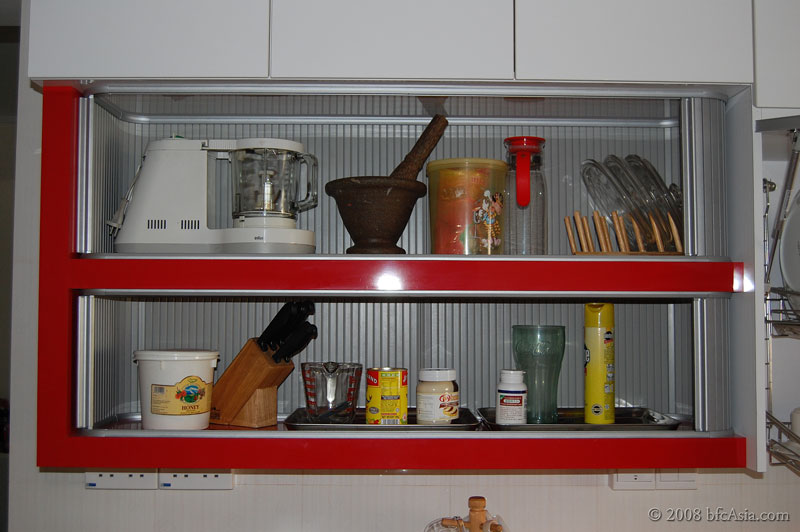
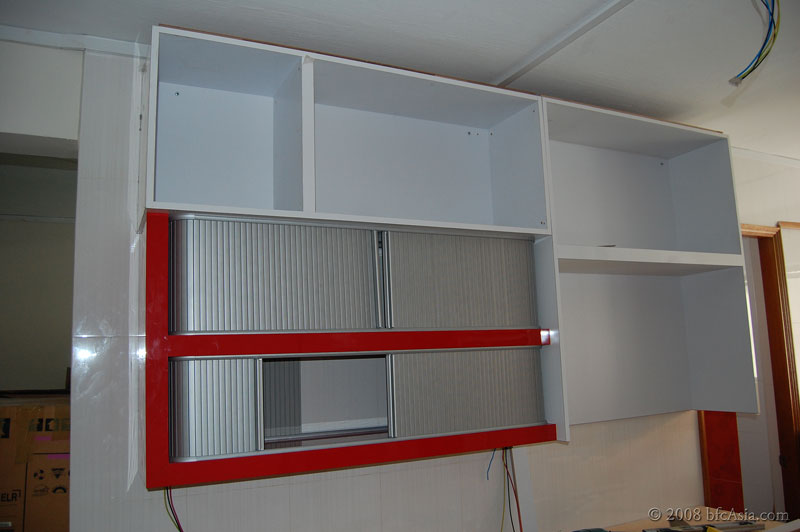
Our Food Preparation Zone consists of the Roller Shelf Unit, the worktop, and several drawers in the base cabinet. The Roller Shelf Unit provides easy access to frequently used items such as sugar, coffee & tea bags, creamer, knife block, etc that are placed on the shelves.

Food Prep Zone

Food preparation entails washing meat, fish and veggies, cutting them on the chopping board, washing utensils and knives used in the food preparation, and finally removing waste organic products from the worktop after the ingredients have been prepared.

All of these activities suggest the Food Preparation Zone must be located next to the kitchen sink.

Roller Shelf Unit
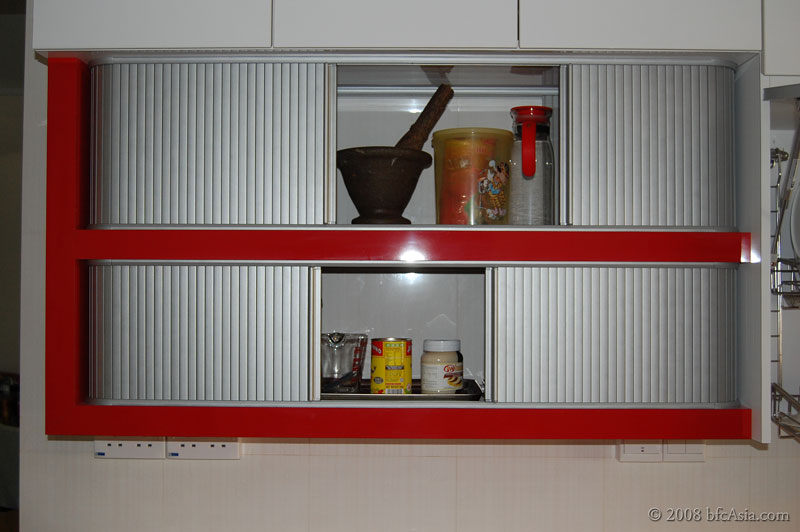

Our breakfast-drinks-snack counter is sited in the Food Preparation Zone.

Throughout the day and (evening too) we make a lot of coffee, tea or Milo and it is convenient to prepare such snacks and drinks next to the kitchen sink. The Roller Shelf Unit gives us quick and open access to items we need frequently.

And we place the toaster, waffle maker, blender, mortar & pestle, juicer, etc on the open shelves for quick and easy access.

Cleaning Zone
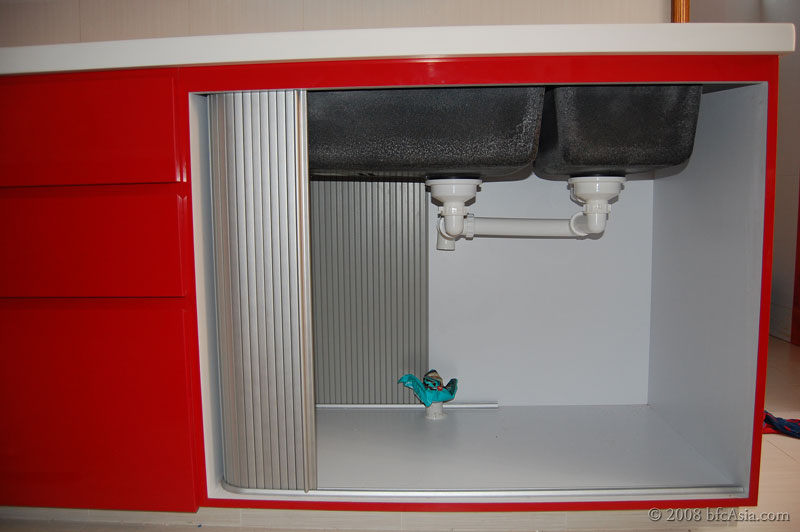
For instance, we think the kitchen sink ( aka "the Cleaning Zone" ) is the most important part of the entire kitchen, and plan our kitchen around the sink. That means plates, mugs, pots, pans, kwalis, and other cookware are stored near the sink.

Dish Drainer Unit
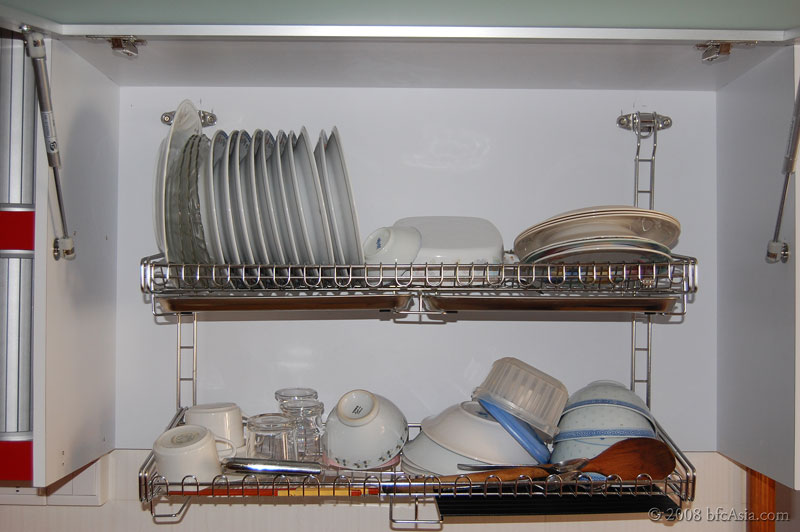

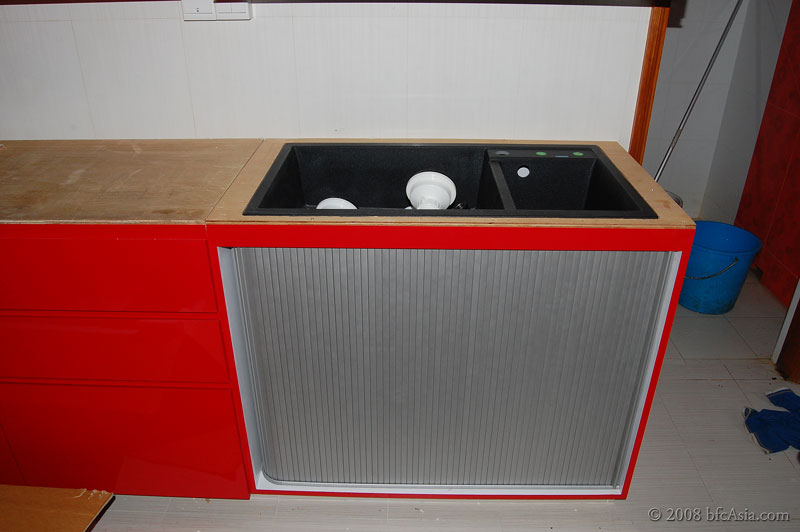
The dish rack above the sink serves both as a drainer and storage for plates, cups, and small flatware. Larger utensils such as kwalis, pots and pans are placed on the rack beneath the sink to dry and store after wash-up.

Kitchen Sink with yet-to-install drying rack beneath


Other Storage Zone
Finally, items such as the stainless steel steam-boat and stove, are stored on the upper shelves of the wall cabinets. Such items would require a ladder to take out and put back, hence the upper shelves are ideal for items used infrequently.

Obviously, the defined zones in our kitchen are not sacrosanct. As we use the kitchen in the ensuing months, we will tweak and refine the zones to meet our evolving storage needs.

One Last Word
In our old kitchen we had a TEFAL Oil Fryer, Panasonic Fruit Juicer, Spring kwali and cover, Zebra stock pots, several oil pots, etc -- all of which were not used, two steam boats with accompanying stoves, Tiger Teppanyaki pans, and more china ware, glasses, mugs than we would ever get to use, even when entertaining guests!

For our new kitchen we therefore need to consciously avoid buying kitchen items we do not need immediately. The catchword is immediate. Many times we bought items we thought we would need. Perhaps not immediately but surely at some time in the future? Consequently, over time our kitchen became cluttered with items we have bought but did not use.


Therefore we will assiduously avoid and resist impulse buying of kitchen items such as new pots and pans, appliances, or chinaware that caught our fancy.

That will be the surest way to ensure our new kitchen remains functional and relevant -- not simply a storage place for items we may need in the future.

Related Posts
1 Kitchen Design
2 Kitchen Zones
3 Perspective Drawing
4 Kitchen Color Scheme
5 Kitchen Drawer System
5 Hettich Drawer Slides & Runners

Kitchen: Food Preparation & Cleaning Zone

Workmanship: Kitchen Works
1 Kitchen: Cooking & Food Storage Zone
2 Kitchen: Microwave Oven Cabinet
3 Kitchen: The Sink Unit
4 Kitchen: Food Preparation & Cleaning Zone
5 Kitchen: Worktop & Kitchen Sink
6 Kitchen: Splashback

The Cleaning Zone in my kitchen is basically the Dish Drainer Unit and the kitchen sink below it. Beneath the sink is storage space for dish cleaners, and a drying-cum-storage rack for woks, pots and pans. The Food Preparation Zone is the counter space below the Roller Shelf Unit, and includes pull-out deep drawer cabinets for storage of cutlery, plates, appliances and gadgets used in food preparation.

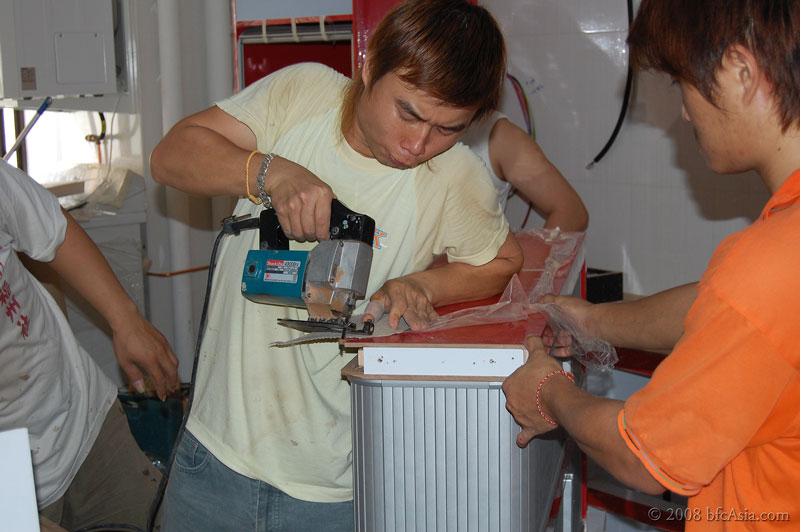
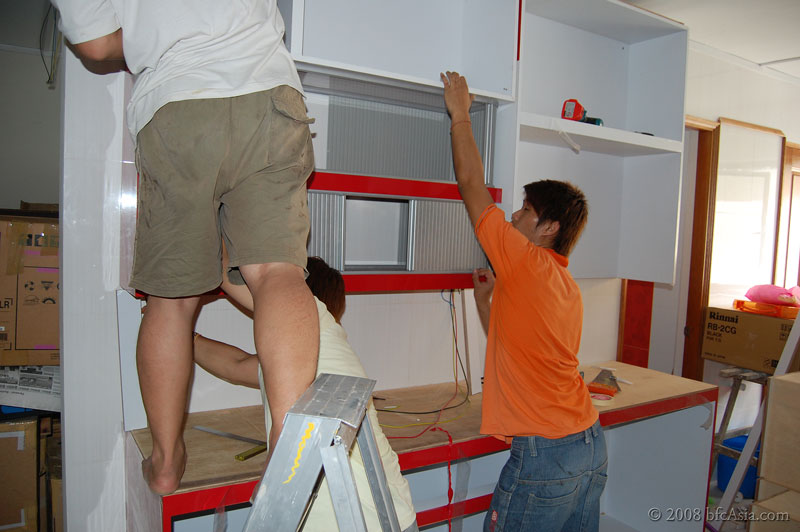
Preparing the Dish Drainer Unit

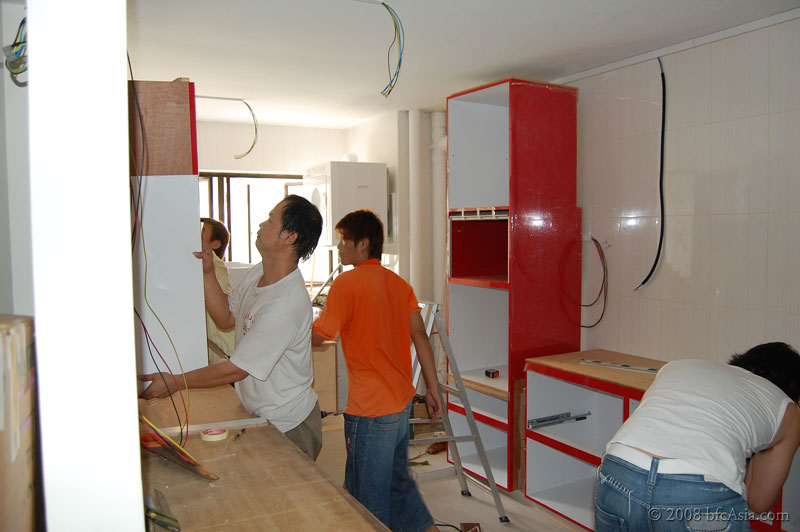
Fixing the Dish Drainer Unit

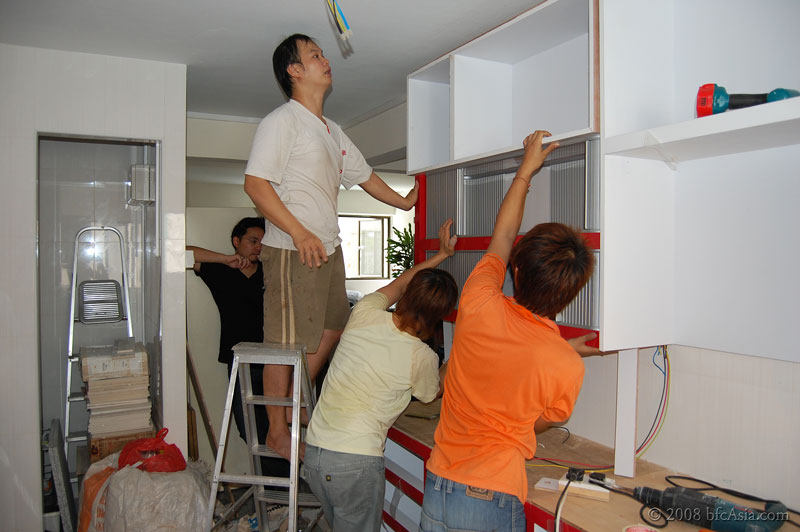
The Roller Shelving Unit

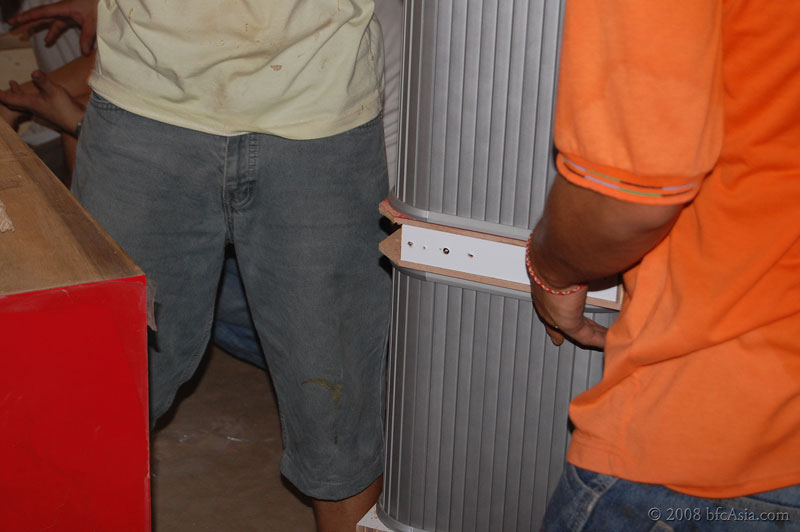
Corners cut for Electric Cables

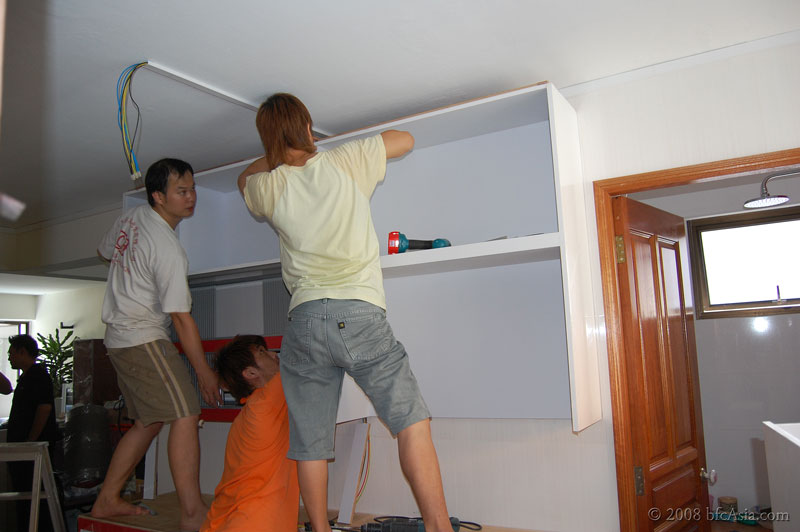
Fixing the Roller Shelving Unit

Making final adjustments

Realigning the Dish Drainer Unit

Ensuring good alignment

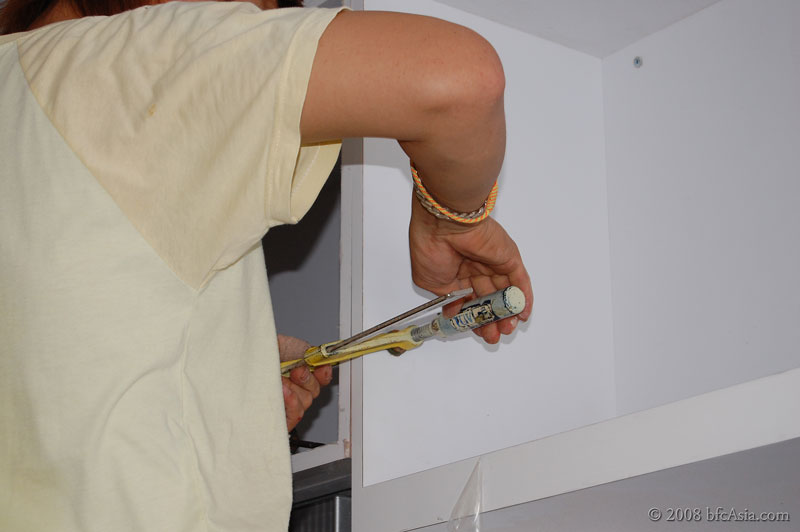
Clamp before drilling screw holes

Completed Roller Shelf Unit & Dish Drainer Unit


Workmanship: Kitchen Works
1 Kitchen: Cooking & Food Storage Zone
2 Kitchen: Microwave Oven Cabinet
3 Kitchen: The Sink Unit
4 Kitchen: Food Preparation & Cleaning Zone
5 Kitchen: Worktop & Kitchen Sink
6 Kitchen: Splashback

Kitchen Color Scheme

Related Posts
1 Kitchen Design
2 Kitchen Zones
3 Perspective Drawing
4 Kitchen Color Scheme
5 Kitchen Drawer System
6 Hettich Drawer Slides & Runners
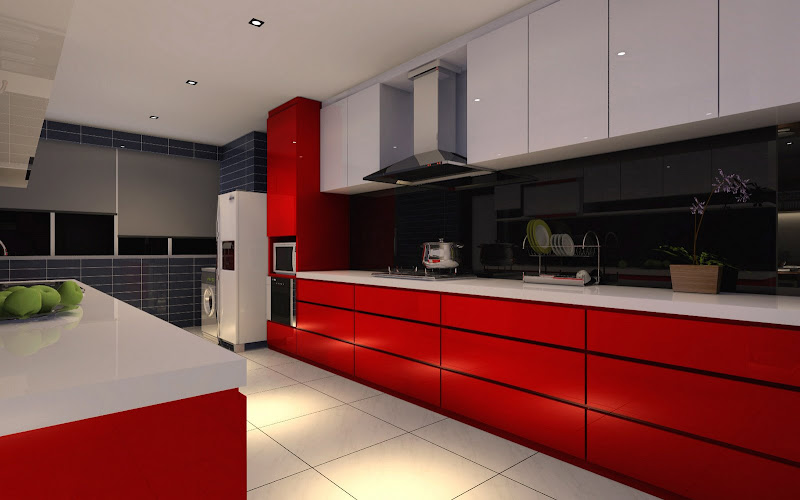
My ID submitted new perspective drawings of my kitchen with the color scheme I had indicated.

I must really give credit to my ID for his color sense. Originally I had wanted glossy red for the kitchen cabinets i.e. red for the cabinet fronts, and white for the counter top and cabinet carcass and sides. Not any kind of red, but a new red shade that was recently introduced, something like the red tone that appeared in Ikea's 2008 Kitchen Catalog.

But after mulling over the color scheme for several weeks, I felt it was too brash, too bold, too splashy! Too much red I thought. Maybe it would look good initially, but would we be able to live with it one or two years later?

I began to feel it would perhaps be safer to err on the side of caution ... better select a neutral color like wood-grained paneling instead of bright, brashy red!

However, my ID liked my original choice of color and suggested the top cabinet could be in white, with the bottom cabinets in red. And he will use a glass backsplash that is spray-painted black. That will tone down the overall red impact, and give an overall classy look.

I wasn't convinced, and asked him to show me the drawings:

So what do you think?

hmm... I think I like the new color scheme, the red being toned down somewhat with white for the top cabinets instead of red. And the black glass back-splash complements the overall look. Nice !

But there would be some changes to the cabinet design.

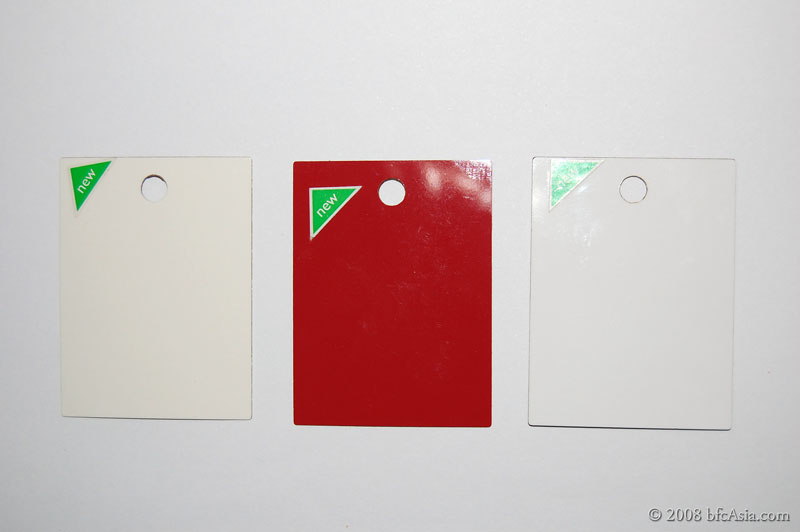
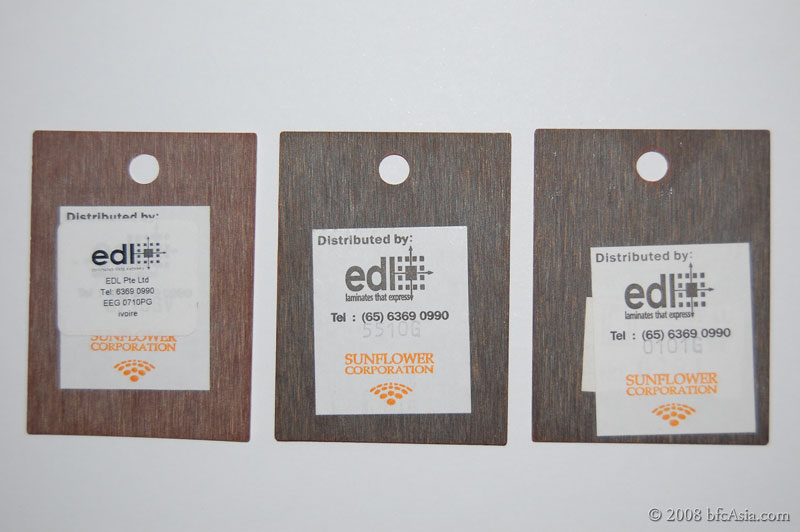
ADDENDUM: Some readers reacted strongly to the proposed color scheme, preferring a more neutral color. It is difficult to discuss colors based on what's shown on the web because somehow (blame it on my poor photographic skills) the color reproduced by the camera and the web is nowhere near the real thing.

For what it is worth, I reproduced below retouched pictures of the color samples, to be as close as possible to the colors chosen. The color codes are also given for those who have asked, EDL Laminate Color Code Ref: 5510G and 0101G in my case.


Related Posts
1 Kitchen Design
2 Kitchen Zones
3 Perspective Drawing
4 Kitchen Color Scheme
5 Kitchen Drawer System
6 Hettich Drawer Slides & Runners
Kitchen Drawer System

Related Posts
1 Kitchen Design
2 Kitchen Zones
3 Perspective Drawing
4 Kitchen Color Scheme
5 Kitchen Drawer System
6 Hettich Drawer Slides & Runners

The main concept for our new kitchen was functionality and accessibility. And functionality does not equate to lots of storage spaces, as we had found out.

Our old kitchen had two large floor-to-ceiling tall cabinets with shelves and doors. Lots of storage? Yes, but little functionality. The cabinets stored paper rolls, cling-wrap, aluminum foil, extra tooth-brushes, toothpaste, shampoos, soap bars, canned food, dried goods, cake tins, biscuit tins, paper towels, etc.. you name it, we had it. You get the picture.

What happened? Well, initially things were organized and neat. But after several months, it became a routine to leave frequently used items on the counter top instead of the deep recesses within the cupboard. Convenient - yes, but what a mess!

We decided drawers and open shelving are the means to achieve our goal of functionality and accessibility. Placed below the worktop, drawers provide convenient and easily accessible storage. Organized into zones recommended on Blum's Moving Products Solution or Hettich's Intelligent Kitchen website, drawers are the workhorse of the kitchen: they make or break the kitchen.

Therefore we decided we could build our concept functional kitchen with drawers and open shelves, all within easy reach, no need to use a stool or ladder. We also want kitchen items such as cutlery, utensils and appliances that are used daily to be organized and remain hidden -- to promote a clutter-free and organized kitchen.

Can we really achieve a functional, clutter-free and yet organized kitchen? Often the reality is far-flung from the expectation. How will the concept work out in practice? Did we get the measurements right? How is the actual experience? Did we achieve what we set out to do?

We shall have to wait and see.

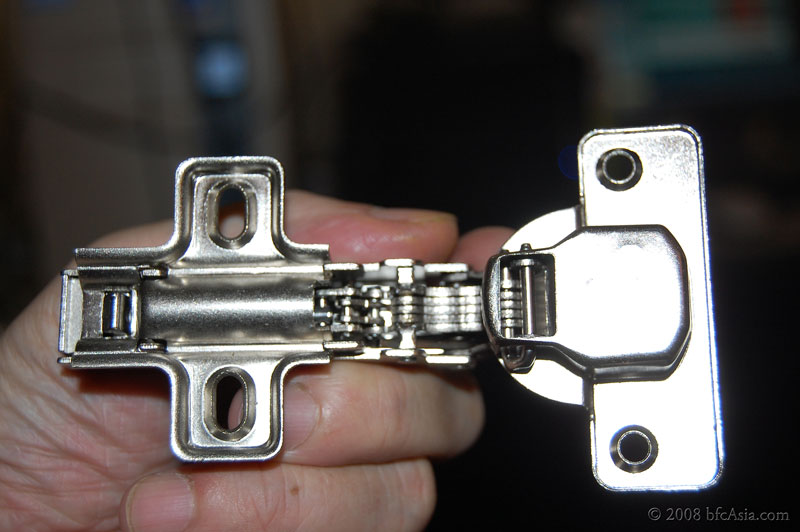
Obverse view: Hettich Meca Hinge

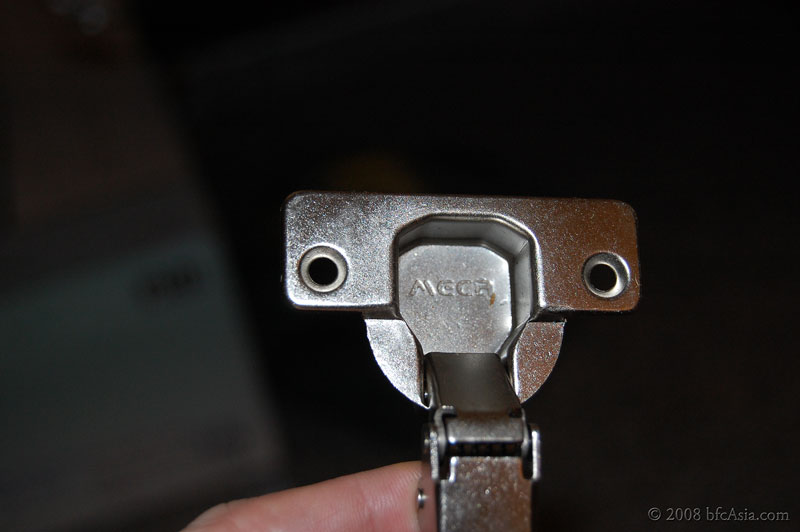
Reverse view: Hettich Meca Hinge

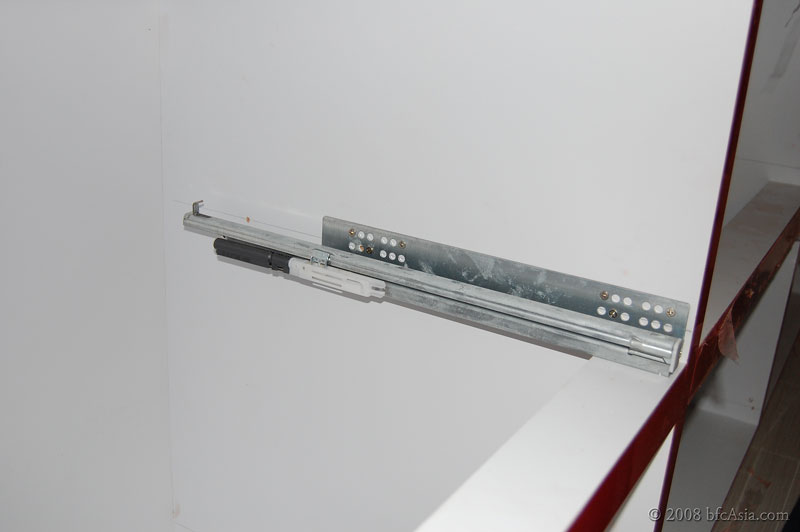
Hettite Drawer Slide Runner

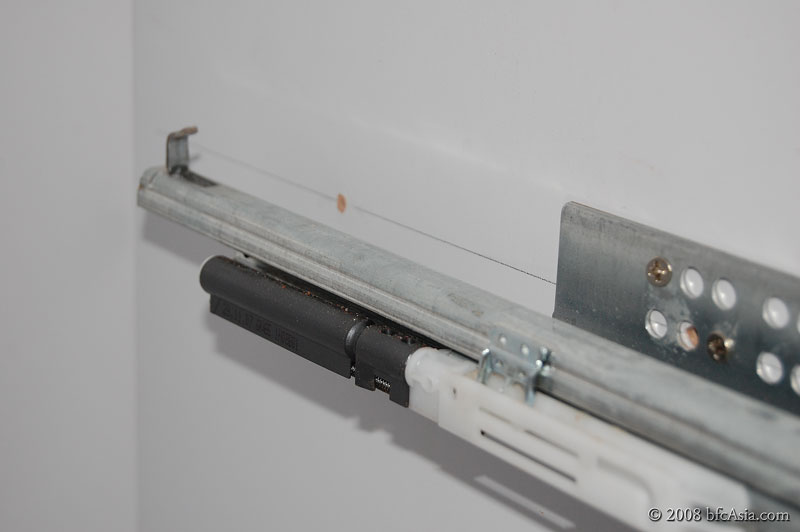
Closeup of Hettich's Silent System soft-closer device

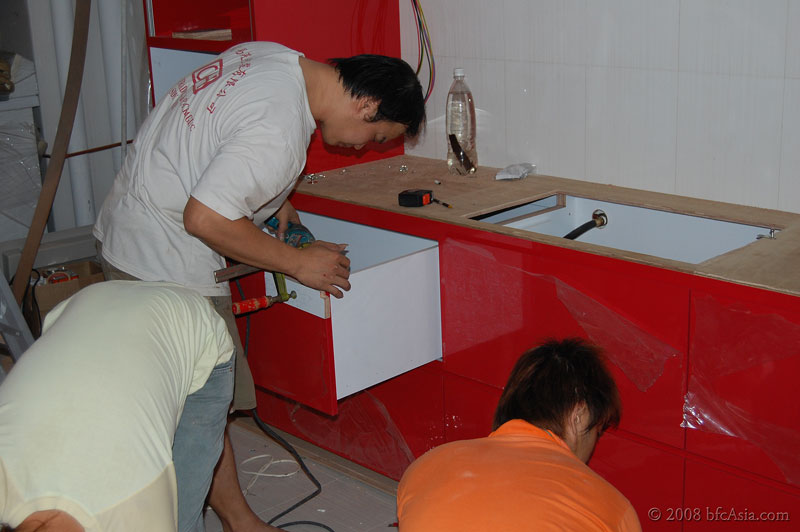
Fitting the Drawer

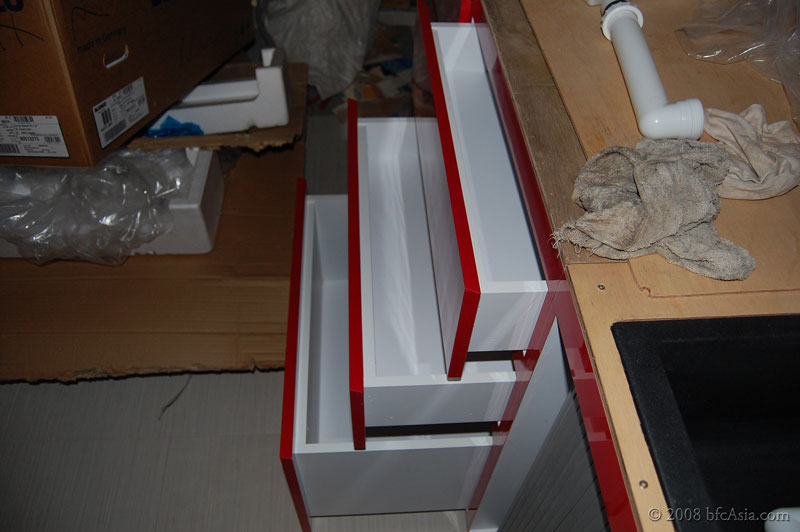
Drawers with Hettich slide runners hidden

Drawer loaded with 21-kg tile carton


Related Posts
1 Kitchen Design
2 Kitchen Zones
3 Perspective Drawing
4 Kitchen Color Scheme
5 Kitchen Drawer System
6 Hettich Drawer Slides & Runners
Kitchen: Perspective Drawings

Related Posts
1 Kitchen Design
2 Kitchen Zones
3 Perspective Drawing
4 Kitchen Color Scheme
5 Kitchen Drawer System
6 Hettich Drawer Slides & Runners
As mentioned in other posts, I had sold our private apartment and was required to hand vacant possession to the buyer by 10-Feb 08. I only collected keys to the HDB resale flat on 14-Jan-08. I thus had very little time to renovate the HDB flat, because LNY fell on 7-Feb in 2008.

I therefore decided to renovate the flat in 2 stages: Stage 1 involved the wet works, replacement of doors and windows, plumbing, laying laminated flooring over the ceramic floors in the bedrooms, electrical rewiring, and air-con installation. Stage 2 would be the carpentry works.

Stage 1 has been essentially completed, remaining as at today (17-Mar-08) only the window areas to be tiled, following which the WC bowl could be installed. By the end of the week Stage 1 is expected to be completed.

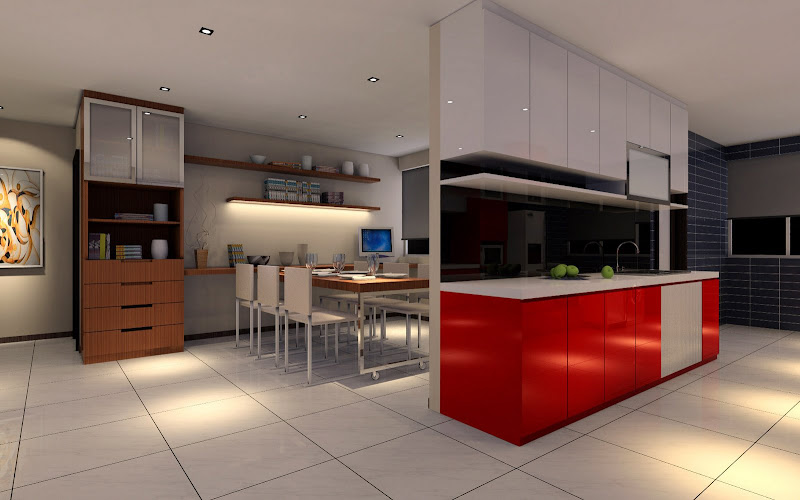
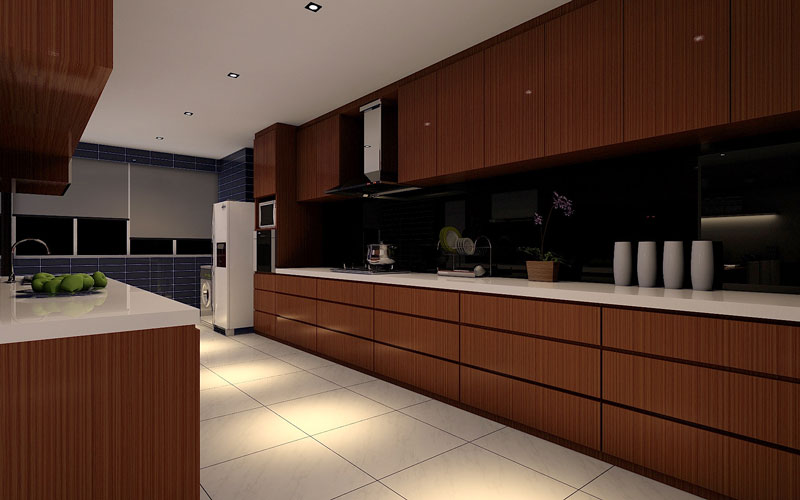
The ID sent me the following perspective drawings for Stage 2 works, based on my requirements:

1-Proposed Galley Kitchen:

2-Proposed Dining Lounge and Galley Kitchen:

3-Proposed Wardrobe:

ADDENDUM: 27-Mar-2011
Now, don't be mesmerized by the drawings! Designers always exaggerate - just like property developers launching new projects - making larger-than-life perspective drawings to draw in the viewer. In reality my kitchen wasn't so humongous like Sketch #1. It would be wonderful if it was.

I have my own sketches, and chose my colors: red and white. That would be the color theme for the bath, toilet as well. It's important you choose a 'safe' color scheme that unifies all the spaces if you want a consistent look. Otherwise you risk getting a look that tires you out before long. Don't go for jazzy designs or designs that are too bold and attractive. Such designs may captivate you for a while, but it certainly will not last. Hence for a durable, eternal look I went for a safe white theme for my kitchen, bathroom, and toilet. Complemented by splashes of red. The red color was chosen carefully. Not all red shades are the same. I went for a shade that had tinges of orange for a darker tonal value than the opposite brighter one. To tone down and ensure that red did not dominate, I complemented the red cabinets with white. So the backdrop was white tiles, white cabinets, white work-top, with red sparingly used to add a bright sparkle to the kitchen. Result is a color scheme that is cheerful, yet not too jazzy, a look that I believe will stand the test of time. In other words, we're unlikely to get tired with the kitchen color theme for a long while.

And that's also why I opted for laminates this time: color and maintenance - those were the two cogent reasons. In my previous custom-fitted kitchen, I went for solid oak cabinet doors. Looked nice, but after a few years, I realized it was difficult to maintain its look owing to atmospheric conditions and our Asian style of cooking. The solid oak cabinets attracted oily vapors and you have few color options aside from the usual wood stains and sealers.

Related Posts
1 Kitchen Design
2 Kitchen Zones
3 Perspective Drawing
4 Kitchen Color Scheme
5 Kitchen Drawer System
6 Hettich Drawer Slides & Runners
 

Copyright © 2008-2011 bfcAsia - All photos and contents are copyrighted material of shunFoto.com • All Rights Reserved